The Fragile Turn: Can South Africa Weather the Storm from Abroad?

cyril ramaphosa
Just as South Africa’s fiscal house shows signs of order, a geopolitical earthquake in the Middle East threatens to shatter the glass. The question is not whether we will feel the tremors, but whether our newly fortified foundations can withstand the shock.
For a brief, hopeful moment last week, the narrative around South Africa’s economy shifted. Finance Minister Enoch Godongwana presented a budget that, for the first time in nearly two decades, showed the national debt stabilising . The primary surplus is growing, and the country’s removal from the grey list has sparked a flicker of international investor confidence . It felt like a corner had been turned.
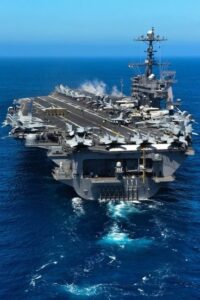
But the world has a way of reminding us that no economy is an island. The escalating crisis in the Middle East—with US and Israeli strikes on Iran and the subsequent disruption of oil flows through the Strait of Hormuz—has sent a shockwave through global markets that is already lapping at our shores . The “green shoots” Mmusi Maimane, Chairperson of the Appropriations Committee, spoke of are now threatened by a very real and very foreign storm .
The math is brutally simple. South Africa is a price-taker in the global energy market, as Godongwana himself admitted this week . With Brent crude spiking, the petrol price has already been adjusted upward, and diesel is now significantly more expensive . This is not just an inconvenience at the pump; it is the beginning of a second wave of cost-push inflation. Diesel powers our farms and our logistics. When farmers pay more, food prices rise. When transport costs increase, every single good becomes more expensive. The 20-cent petrol hike is merely the visible symptom; the underlying disease of higher living costs for already-struggling South Africans is the real threat .
The rand, that fickle barometer of national anxiety, has already weakened past R16.34 to the dollar, reflecting the market’s jitters . While a weaker currency might offer a marginal benefit to mining houses, it is a hammer blow to consumers already buckling under the weight of high interest rates and stagnant wages. It also complicates Treasury’s fiscal consolidation plans, which, as Director-General Duncan Pieterse noted, did not “pencil in” a war . Pieterse assures us that we have a “cushion”—a R131 billion primary surplus—to absorb shocks . But a cushion is not a shield. If the conflict drags on, that surplus could be eroded by slowing growth and the need for potential relief measures.
This is why Build One South Africa (BOSA) leader Mmusi Maimane’s call for an urgent parliamentary debate is not political posturing; it is a necessary act of oversight . Parliament cannot afford to be a passive observer as global events reshape our domestic reality. Maimane is right to demand answers on three fronts: the safety of South Africans potentially stranded in the conflict zone, the economic strategy to mitigate fuel and trade disruptions, and the articulation of a clear, principled foreign policy . In a volatile world, silence from our legislature is complicity in the chaos.
The government’s fiscal discipline is commendable. Stabilising debt and investing in crime prevention and education are the right long-term moves . But long-term planning is useless if we are overwhelmed by a short-term crisis. The R1 billion for policing will feel meagre if inflation spikes and social unrest follows. The investments in education will be for naught if the economy contracts and there are no jobs for graduates to fill.
President Ramaphosa recently lauded eThekwini’s “early recovery,” warning that “stabilisation is not the same as transformation” . That wisdom now applies to the nation as a whole. We have stabilised the fiscal ship, but we are about to sail into treacherous waters. The question before Parliament, and before the nation, is simple: Do we have the leadership to navigate this, or will we allow a war fought on the other side of the world to capsize our fragile recovery before it truly begins?