
Why is Africa still poor even though colonization ended 200 years ago? Did European colonization really do that much damage to Africa?
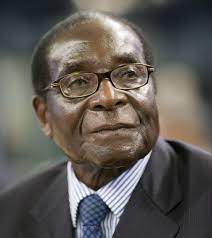
mugabe
This is probably going to upset some people – but I’m only relaying what a Nigerian friend told me!! (And I’ve written it elsewhere on Quora in response to a similar question!)
She said the reason Africa is not so advanced is because they never bothered to learn anything from the Europeans who went there – but where quite prepared to take, take, take.
Yes, they were ‘colonies’ of European countries but, in many countries the local people didn’t seem to want to learn how to do things for themselves but were happy to do things ‘under instruction’.
Take a conversation I had with a Nigerian (Hausa) politician in 1982. We had been invited to his flat in Lagos for a drink and he and I were talking, leaning on the open window frame of his sitting room looking at the garden and the view. Suddenly, quite out of the blue, he turned and told me: ‘You British should never have left!’
I couldn’t believe it but he repeated it. He said the country had gone downhill ever since they were given Independence in 1960 – nobody was prepared to work, they just wanted to give the orders! Take the garden below, for instance (it was a mess)! He said he had asked for it to be cleared and tidied; the answer was always: ‘Yes’ but nothing ever happened.
When the British were there, if you asked for something to be done, it was done – and in double quick time. Now, everyone wanted something for doing nothing! (Remember, this was 1982, not today!).
The same in Sierra Leone! Again I was told the British should never have left the place – it had gone to wrack and ruin since they had gained self-government (this was in 1977!). Net exporters of palm oil when under British rule within three years, next importers – nobody could be bothered to do the work!
The British organised collections of produce from the hill farmers and took it down to market twice a week; when they left, drivers couldn’t be bothered to make the effort to drive into the hills to do the collections – farmers failed, as did the markets.
Instead, there was unrest that culminated, in 1991, in the diamond conflict, a conflict that lasted about ten years!
According to my Nigerian friend, for many years, the West provided all that was necessary – manpower, money and skills. When they left, there was a vacuum – one that most of the European countries thought they had filled with locally-trained people – but the new ‘bosses’ weren’t used to being in total control, they were used to having someone in ‘command’ – and were unable to fill the void; in many cases, they also gave up trying!
There are, of course, exceptions to this. In many countries, Europeans stayed on and successfully trained local people to take over – but, sadly, not everywhere.
However, since those two conversations, time has moved on and many African countries are now very successful with stable governments and hard-working people.
But, for others, there are still problems – such a shame but, according to my friend, the countries should be left to sort themselves out on their own. As long as Europeans are coming in with aid, in many places that malaise will continue.
As I said at the beginning, I’m only writing what a Nigerian friend told me (she was a British-educated doctor, her mother built schools in Lagos and her father was a surgeon in Lagos, so I suspect she knew what she was talking about!